
Teaching Kids Consent and Healthy Boundaries
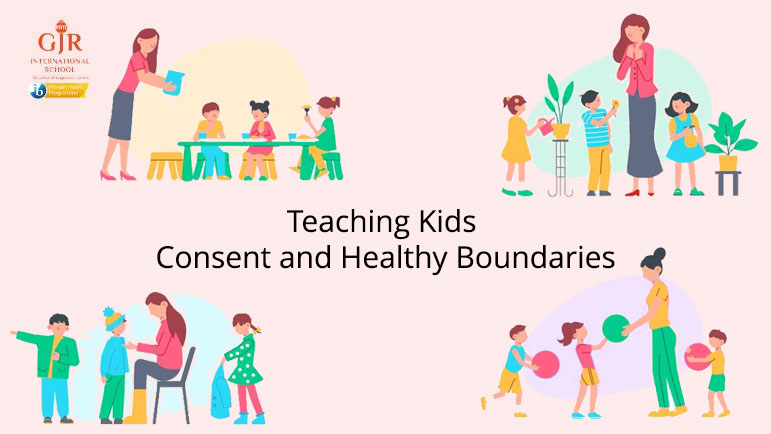
As parents and caregivers, we spend countless hours teaching our kids to tie their shoes, read a book, and say “please” and “thank you.” But there’s a lesson far more vital for their lifelong safety and emotional well-being that often gets overlooked: consent and healthy boundaries. Learn more about GJR International School’s. It’s not just a conversation for teenagers; it starts in the sandbox and the living room. Teaching kid about their own body autonomy and respecting the autonomy of others is one of the most powerful shields we can equip them with. This isn’t a scary talk; it’s an empowering, humanized lesson about respect, feelings, and the magic word: “Yes.”
It All Starts with Body Autonomy
Before teaching kids how to understand consent in a complex social situation, they need to know that their body belongs only to them. This is the bedrock of the entire conversation. We need to normalize the idea that they have the final say over their physical person, even in small, loving ways.
- The Hug Test: Teaching kids when a relative or family friend comes over, don’t automatically command, “Give Grandma a hug!” Instead, try, “Grandma would love a hug if you want to give her one. How would you like to greet her?” Offer alternatives like a high-five, a wave, or a fist-bump. If they choose none, that’s okay, and it should be respected immediately. This teaches them that their body is not public property, and they don’t owe anyone physical affection, no matter how much they love them.
- Medical Consent: Even at the doctor’s office, involve them in the process. Say things like, “The doctor is going to listen to your heart now. Is it okay if I hold your hand while she does it?” Or, “This shot might hurt a little. Would you like to look away or count to three?” Giving them a choice in how to handle an uncomfortable situation reinforces that their feelings and input matter.
- No Means No, Right Away: Practice recognizing and respecting their “no.” If they say “no” to eating another bite of peas, putting on a specific shirt, or playing a game, respect that boundary consistently. When they learn their “no” is powerful and respected by the people they trust most, they are more likely to use it confidently in bigger situations with others.
The “Ask First” Rule: Teaching Kids Respect for Others’ Boundaries
Consent isn’t just about protecting themselves; it’s about learning to be a good, respectful friend. The “Ask First” rule is a simple, actionable tool that can be used in almost every play scenario.
- Sharing vs. Touching: When children are playing, we often focus on sharing toys. We need to extend this to sharing space and physical interaction. If your child wants to tickle a friend, grab their hand, or use their stuffed animal as a pillow, the phrase should always be: “Did you ask your friend first?”
- Example Dialogue: “I see you want to tickle Liam. What’s the polite way to find out if he wants to be tickled?” (Wait for them to respond with, “Can I tickle you?”)
- The Power of Changing Your Mind: Teaching kids that consent is not a one-time thing; it can be revoked. If two kids agree to play a game, and one later says, “I don’t want to play this anymore,” the other must stop immediately and respect the change of heart. This is a crucial concept, emphasizing that “yes” today might be “no” tomorrow, and both are valid. A gentle explanation can be: “Just like you don’t like it when a friend keeps playing a game you said you were finished with, we need to stop when a friend changes their mind.”
- Reading Body Language: While they are learning to ask, teach them to watch for non-verbal cues. This builds their empathy muscle. Say, “Look at your friend’s face. He looks like he’s pulling away and his arms are crossed. Even if he didn’t say ‘stop,’ what does his body tell you?” This helps them develop emotional intelligence and recognize that silence or reluctance is not the same as an enthusiastic “yes.”
Naming Feelings and Using “I Feel” Statements
A major part of setting healthy boundaries is being able to articulate when a boundary has been crossed and how it made them feel. This moves the conversation beyond just rules and into the realm of emotional literacy.
- Practice Boundary Setting: Use role-playing to practice using clear, direct language. For example:
- Scenario: A friend keeps taking your toy.
- Response Practice: “I feel frustrated when you grab my toy without asking. Please ask me next time.”
- Scenario: A cousin is standing too close.
- Response Practice: “I feel uncomfortable because you are too close to me. I need more space.”
- Validate Their Feelings: If they tell you someone made them feel uncomfortable, never dismiss it with phrases like, “Oh, they didn’t mean it,” or “Don’t be rude.” Instead, validate and affirm: “Thank you for telling me. It’s important to listen to that feeling in your tummy. If someone makes you feel uncomfortable, your first job is to walk away, and your second job is to tell a trusted adult.” This builds the trust that you will be their safe harbor when a boundary is violated.
The Lifelong Lesson
Teaching kids consent and boundaries is an ongoing dialogue, not a single lecture. It’s about instilling a deep, internal sense of respect—respect for themselves and respect for others. When we teach kids the magic of “yes” and the power of “no,” we aren’t just protecting them from future harm; we are raising confident, empathetic, and respectful human beings who will contribute to a kinder, more thoughtful world. Teaching kids the best way to humanize this topic is to live it out loud, modeling respectful asking, listening, and honoring boundaries every single day.
Would you like me to provide a list of age-appropriate books that reinforce these lessons on consent and body autonomy?
For more practical tips on teaching kids consent and healthy boundaries to children, check out this helpful guide by Times of India